


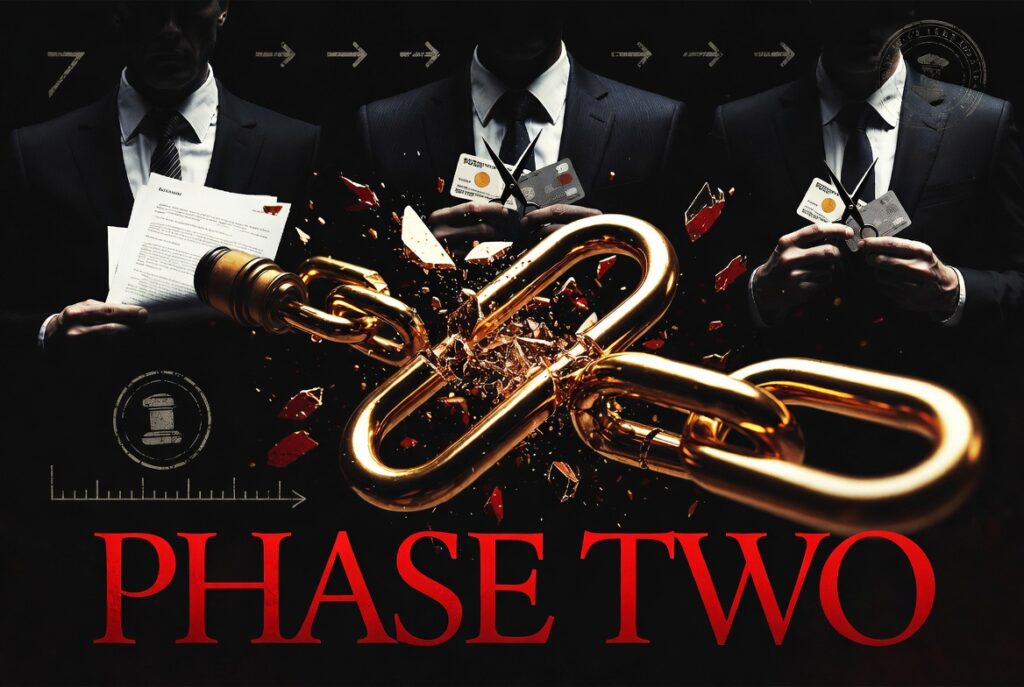
The destruction of Equibit Group was not a single failure but a deliberate, multi-year operation carried out in distinct phases.
Phase One (2017–Early 2019) combined regulatory entrapment, key personnel betrayal, and immediate technical sabotage to cripple the company.
Phase Two (2019 onward) shifted to legal warfare, reputational destruction, financial isolation, and — when litigation advanced — renewed technical attacks.
This is how a Canadian blockchain project with federal research support and groundbreaking technology was systematically dismantled.
Phase One: Regulatory Trap, Betrayal, and Collapse (2017–Early 2019)
The campaign opened in 2017–2018 with the Ontario Securities Commission. According to detailed records, the OSC engaged with Equibit several times and directed the company to complete a pre-sale, only to later launch an enforcement action against the very activity they had greenlit. This regulatory pressure was a major driver behind plans to relocate operations to Switzerland.
This pattern mirrors other documented cases, such as the RCMP’s handling of John Nuttall and Amanda Korody (2016 BCSC 1404), where authorities, under the guidance of CSIS, allegedly encouraged conduct and then punished it. In both instances, regulatory and law enforcement bodies appear to have been used not to protect the public, but as tools to destroy targeted entities.
After the OSC eventually withdrew its enforcement action, lead wallet developer Sergei disappeared in mid-2018 along with critical code— another devastating blow. By late 2018, with crypto winter in full force and funding completely dried up, Chris Horlacher returned to Canada to execute painful downsizing measures.
In early 2019, as the company fought for survival, the final blows of Phase One landed. Christian Saucier (a.k.a. flaxscrip) commenced a public libel and reputational attack against Horlacher. Shortly afterward, David McFadzean (a.k.a. macterra) effectively sabotaged the mainnet launch. Although Equibit’s genesis block was mined on February 21, 2019, the network collapsed in April 2019 after David reportedly switched off his node. No proper fixed seed nodes or DNS seeds had been established — an omission inconsistent with his experience and the code’s configuration.
By spring 2019, Equibit had been effectively neutralized as a functioning project.
Phase Two: Legal Warfare, Financial Strangulation, and Renewed Attacks (2019–2026)
With the company on its knees, Phase Two began in earnest.
In January 2021, Equibit Group Ltd., Chris Horlacher, and others filed suit in the Ontario Superior Court of Justice (Court File No. CV-21-00654929-0000) against Christian Saucier, David McFadzean, Abdelaziz Oulad Hadj, Bart De Groot, and additional defendants. The Statement of Claim detailed serious allegations of breach of fiduciary duty, misappropriation of intellectual property, sabotage, and defamation.
The defendants’ Statements of Defence largely denied the claims. However, their own public GitHub activity from 2019 tells a clearer story: systematic forking and rebranding of the Equibit codebase into the OCEAN/Tesseract project, documented through pull requests, wiki votes, bounties, and file renames. Contributions from accounts linked to the defendants prove active participation in the very conduct they later denied under oath.
These records, preserved and publicly available, demonstrate that our allegations were not speculative. They were proven by the defendants’ own hands long before any lawsuit was filed. Their Statements of Defence contained no credible rebuttal evidence — only blanket denials and counter-accusations.
Throughout this period and continuing for years afterward, Equibit and its principals faced coordinated financial isolation. This pattern of institutional pressure escalated again in early 2026, when Revolut suddenly de-banked Horlacher’s companies. Strange calls from several Canadian banks to Chris followed shortly afterward, along with an email received from a Canadian detailing his own extortion experience at the hands of TD Canada Trust — where he was threatened with the closure of all his accounts unless false statements were provided by him to a mystery figure known only as “Phil.”
This is classic Zersetzung — the modernized Stasi tactic of using institutional pressure, financial warfare, and social isolation to break a target without traditional arrest or overt violence.
The 2025 Escalation
In mid-2025, as Equibit’s legal efforts approached a formal discovery session with CSIS, a new wave of technical attacks emerged (DNS man-in-the-middle attacks, live Microsoft intrusions, etc.), allegedly linked to Marc Godard and precisely timed with the discovery schedule, as well as a fraudulent hostile takeover attempt spearheaded by Godard. The 2026 de-banking events continued this pattern of pressure whenever accountability appeared closer.
The Broader Pattern
Phase One used regulatory pressure, insider betrayal (Sergei, Christian, David), and immediate sabotage to collapse the company.
Phase Two shifted to prolonged legal attrition, reputational destruction, financial warfare, and renewed technical interference timed to litigation milestones.
This was never a simple business dispute or market failure. It was the methodical assassination of a Canadian innovation that threatened entrenched interests in securities and capital markets.
The Human Cost
Behind the technical logs, court filings, and GitHub commits lies a human story. A Canadian innovator who secured federal research funding, built groundbreaking securities technology, and sought to advance blockchain for legitimate capital markets was driven into exile in Mexico. His family was torn apart. His reputation was systematically attacked. All while he continued meticulously documenting everything.
This was never just about one company. It was about sending a message: certain technologies and certain people are not allowed to succeed.
Controlling the Battlefield
Despite years of continuous attacks, Horlacher maintained a deliberate “control the battlefield” strategy: relocating to Mexico to limit easy domestic surveillance, deploying honeypots, conducting controlled disclosures, preserving forensic evidence with rigorous chain-of-custody, and building the comprehensive public archive at equibitlawsuit.com.
The Marc Godard revelations detailed in an upcoming article represent the crucial human intelligence thread that ties both phases together.
What Comes Next
The full Factum of Equibit Group — containing the complete evidentiary synthesis across all phases — is being prepared for release. Every technical report, court filing, GitHub archive, timeline, and forensic finding remains open for public scrutiny.
The record is clear. The sequence is documented. The only remaining question is the full extent of institutional involvement.
The assassination of Equibit was meant to be a warning.
Instead, it has become evidence.
The story continues.