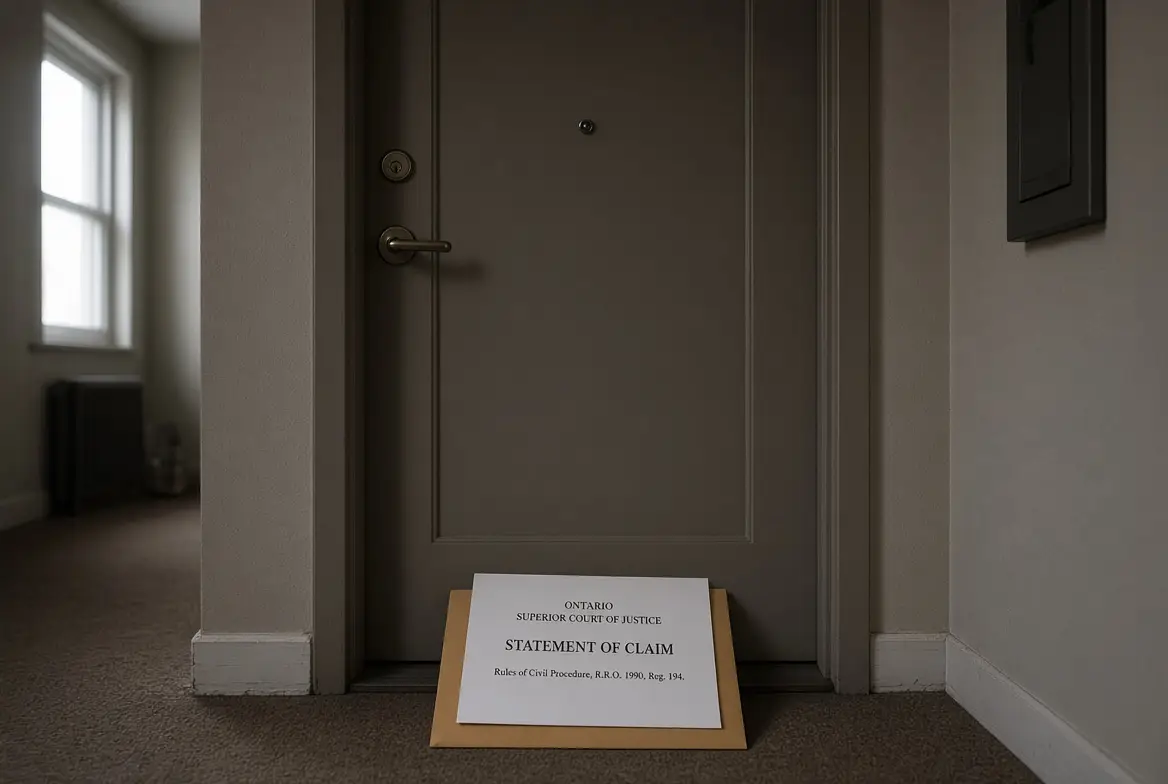



Canada’s Canadian Security Intelligence Service Act gives CSIS powerful tools to apply for highly intrusive secret warrants from the Federal Court under Section 21. These ex parte (one-sided) and in camera (secret) proceedings mean judges hear only CSIS’s version of events. In exchange for this extraordinary power, CSIS and the Department of Justice owe the Court a heightened duty of candour — the obligation to provide full, frank, complete, and transparent disclosure of all material facts, including those that might weaken or undermine the warrant application. That jurisprudence is part of the public context of Court File No. CV-20-00645492-0000.
When this duty is breached, judges authorize surveillance, data collection, or disruptive measures based on incomplete or misleading information. In the context of alleged Zersetzung — modern psychological harassment, sabotage, financial warfare, reputational attacks, and “neutralization” operations designed to destroy a target without laying formal charges — these secret warrants become an ideal covert mechanism. They provide legal cover while the target is left in the dark, often attributing events to “bad luck,” paranoia, or personal failure.
The public record reveals a repeated pattern: CSIS has been cited by Federal Court judges for breaching its duty of candour. Judges have described institutional failings, cavalier attitudes toward the rule of law, and a history of omissions.
2016 FC 1105: The ODAC Data Retention Scandal
In X (Re), 2016 FC 1105, Justice Simon Noël delivered a strongly worded judgment concerning CSIS’s Operational Data Analysis Centre (ODAC). CSIS had been collecting and retaining vast amounts of “associated data” (metadata and other information linked to individuals who posed no threat to national security) for over a decade without properly disclosing the program to the Court.
Justice Noël found that CSIS had breached its duty of candour since at least 2006. The Service failed to inform the Court “clearly and transparently” about its retention practices. The Court emphasized that in ex parte proceedings, CSIS must disclose information “fully, substantially, clearly and transparently.”
Justice Noël expressed clear frustration, noting this was not the first time the Court had found such a breach (referencing Justice Mosley’s earlier findings). He questioned what it would take for CSIS to take the duty seriously — even raising the possibility of future contempt proceedings.
Key Link: Summary and analysis of the judgment available here.
2020 FC 616: A Systemic Rebuke and Call for External Review
The most damning public judgment came in 2020 FC 616 (public reasons released July 2020), presided over by Justice Patrick Gleeson. In this case, CSIS had relied on information from human sources in warrant applications without disclosing that the underlying collection activities may have been illegal. The Service failed to proactively identify and disclose these serious issues.
Justice Gleeson described a “troubling pattern” of omissions dating back years. He highlighted “institutional failings” within both CSIS and the Department of Justice. The language in the judgment reveals deep judicial exasperation:
- CSIS engaged in operational activity it later conceded was illegal.
- The breaches reflected systemic disregard for — or a cavalier approach to — the duty of candour and the rule of law.
- The circumstances raised “fundamental questions relating to respect for the rule of law [and] the oversight of security intelligence activities.”
Justice Gleeson went further than previous rulings by recommending a comprehensive external review to identify systemic, governance, and cultural shortcomings. This led directly to the NSIRA review of the matter. He even declared that “A contempt proceeding would also fall well short of exploring and addressing the rule of law questions that have arisen in these proceedings.”
Key Link: Public version of the judgment available here (CanLII / Federal Court site) and the redacted PDF here.
Earlier and Related Breaches: A Long Pattern
The problem is not new. Federal Court judges have repeatedly admonished CSIS:
- Justice Richard Mosley’s rulings (2013 FC 1275 and related): CSIS breached its duty of candour by failing to disclose that it was enlisting foreign partners (via CSE) to conduct surveillance on Canadians abroad that CSIS itself could not lawfully perform. Mosley found strategic omissions in warrant applications.
- Other X (Re) decisions in the series highlighted failures to disclose material facts about source reliability, data handling, and operational methods.
The NSIRA review arising from 2020 FC 616 documented that issues with candour “are almost as old as CSIS itself.” Directors have repeatedly promised reforms after each scandal, only for problems to recur due to high turnover, loss of institutional knowledge, and cultural issues.
Judicial Exasperation: “This Must Stop”
Federal Court judges have grown increasingly blunt. Their exasperation is palpable:
- Repeated findings of breach despite prior warnings.
- Institutional disregard for the rule of law.
- Reliance on the Court’s trust in a one-sided process that is being abused.
Judges have essentially said: We are being asked to authorize extraordinary powers in secret, and you keep withholding critical information. This undermines the entire warrant system and public confidence in national security oversight.
Implications for Alleged Zersetzung Operations
In cases involving sustained, multi-vector harassment against a private citizen or company (technical attacks, de-banking, insider sabotage, reputational destruction), secret Section 21 warrants provide a perfect vehicle. They allow CSIS (or tasking of partners) to conduct or enable disruptive measures while the target has no effective way to challenge the authorization.
Repeated candour breaches raise a serious concern: some warrants may have been obtained, or renewed, on incomplete or misleading information — exactly the environment in which abusive targeting could occur with little accountability.
The Path Forward
The pattern is clear and well-documented. CSIS has a documented history of failing its duty of candour to the Federal Court. Judges have expressed serious and growing frustration. Yet meaningful structural accountability remains elusive.
Canadians have a right to know whether these powerful secret tools are being used solely against genuine threats — or whether they are also being turned against citizens who become inconvenient through innovation, activism, or simply asking difficult questions.
The public archive at equibitlawsuit.com exists to document one such alleged case in exhaustive detail.
Further Reading
- Statement of Claim Against CSIS
- CSIS Forced Into Discovery
- Zersetzung in the 21st Century
- Seven Documented Technical Attacks