


Court File No. CV-20-00645492-0000
Equibit Group Ltd. v. Attorney General of Canada et al.
Related: CSIS and the Canadian Entrapment Factory · De-banking and Institutional Pressure
Over the past several months, we have documented a predictable pattern with independent Canadian journalists interested in the Equibit lawsuit: initial enthusiasm, detailed questions, sometimes lengthy calls — followed by sudden, total silence.
This is not isolated. It reflects a deeper, systemic failure in Canadian journalism.
Journalists Who Approached the Equibit Lawsuit
- May 29, 2026: Navigator Ltd. (a major Canadian PR and government relations firm) is contacted with a clear proposal and $50,000 starting budget to help make the story of government Zersetzung-style operations a national conversation. No response whatsoever. This was, in fact, the second time Chris had reached out to Navigator requesting an engagement. The first attempt was made on August 28, 2022.
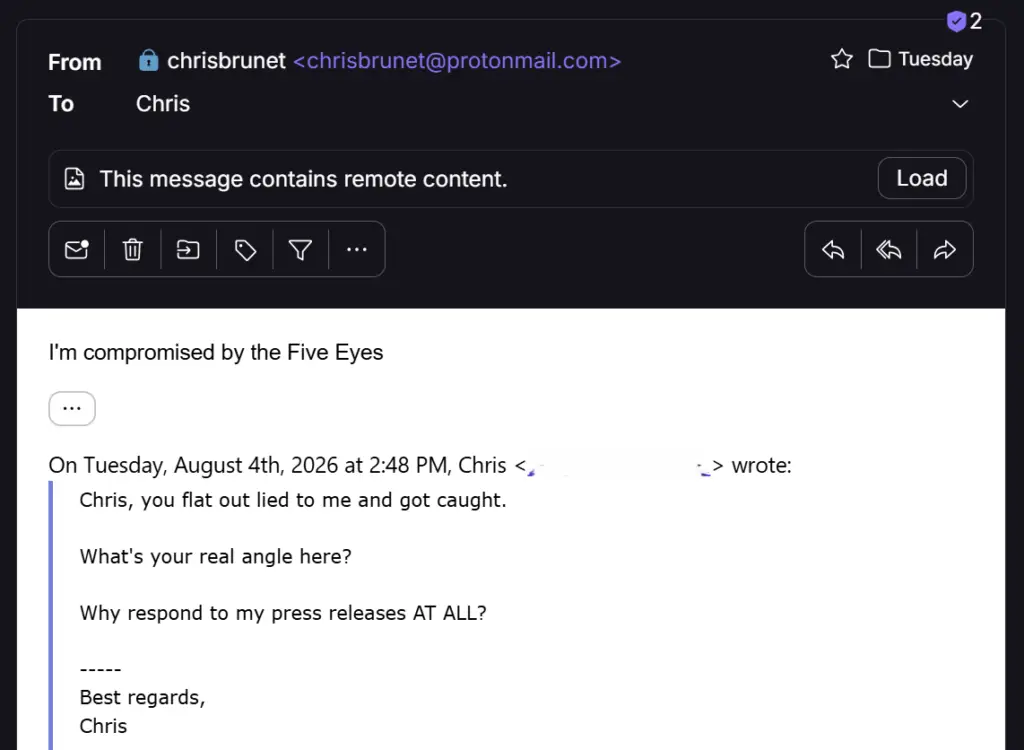
- June 9, 2026: Independent journalist Chris Brunet reaches out for more information the same day after our de-banking press release. A detailed response is sent back. No further reply is received except for a short message on June 27 to say “I just don’t have the hours in the week to devote to this.” In another email replying to a detailed press release on August 4th, Brunet refers to reporting on ongoing litigation as “bad journalism.” This statement stands in stark contrast to his ongoing coverage of the Seth Rich (Huddleston v. FBI) lawsuit, as well as the Avraham Eisenberg cases involving the US DOJ and SEC. After Horlacher pointed these glaring contradictions, Brunet replied within minutes, pivoting his excuse to “The details are too confusing to understand.”
- June 5–18, 2026: Jason Stockton of Wiretap Media engages deeply, including a 2.5-hour call. Proposed follow-up meetings with legal counsel are ignored.
- Multiple other outlets have followed the exact same trajectory over the years, including David Pugliese (Ottawa Citizen), Jim Bronskill (Canadian Press), Steven Zhou (Independent), and Catharine Tunney (CBC).
The same journalistic reluctance is visible in other high-profile cases involving powerful institutions.
Jeffrey Brown vs. the Toronto Star
Journalist Jeffrey Brown has launched a lawsuit against the Toronto Star, alleging the paper suppressed explosive information provided by the RCMP. According to the claim, the RCMP discovered child sexual abuse material (CSAM) on devices linked to then-Prime Minister Justin Trudeau and informed the Toronto Star in 2021 — yet the newspaper refused to report it.
Brown’s Statement of Claim details these serious allegations of editorial suppression.
This case mirrors our own experience: when the evidence points toward misconduct at the highest levels of government or powerful institutions, many outlets retreat rather than pursue the story.
The Fifth Estate Myth vs. the Record
For generations, the independent press has proudly called itself the Fifth Estate — a force holding government accountable on behalf of the public.
In theory, this is noble: fearless journalists exposing corruption no matter who holds power.
In practice, especially in Canada, the opposite is too often true:
- Protection of Entrenched Interests: Stories involving intelligence agencies (CSIS), major banks, or senior political figures frequently trigger caution or outright avoidance.
- Access Journalism: Maintaining cozy relationships with government sources and corporate PR often outweighs uncomfortable truths.
- Self-Preservation: Challenging powerful institutions risks backlash, loss of access, or reputational attacks.
- Narrative Gatekeeping: Stories are framed safely — or ignored — if they challenge approved narratives.
The contrast is glaring. When stories fit establishment threat narratives, coverage is intense. When they implicate the state or its allies — as in our CSIS lawsuit or Jeffrey Brown’s allegations against the Toronto Star — the silence is deafening.
Place in the Equibit Lawsuit
Silence from newsrooms is not a pleading. It is context. The Equibit lawsuit still has to be proved in Court File No. CV-20-00645492-0000 and the three companion actions. The Fifth Estate myth matters because the public record — the Statements of Claim, the OIC final report, the technical-attack chronology — has been available and has not produced proportionate coverage. That gap is now part of how the file moves through the Canadian information system, including the de-banking and institutional-pressure sequence described in De-banking and Institutional Pressure.
A captured or cowardly press (and supporting PR infrastructure) is not a check on power — it becomes an enabler of it. When journalists fish for information then ghost once the full picture emerges, they help maintain the very systems they claim to scrutinize.
This is why direct public access to primary evidence matters. The Factum, technical logs, emails, and court documents on this site exist because we cannot rely on traditional media to fulfill their watchdog role.
How You Can Help Break the Pattern
- Amplify Primary Sources: Share the Factum and supporting documents directly.
- Hold Media & PR Firms Accountable: Publicly ask why they go silent on stories involving CSIS, de-banking, or alleged high-level suppression.
- Support Independent Journalism: Back those willing to take risks.
- Demand Transparency: Contact newsrooms and firms like Navigator and ask direct questions.
- Fund the Fight: Your support sustains both the lawsuit and the public evidence archive.
The “Fifth Estate” ideal is worth defending — but only if the press is willing to live up to it. Until then, we will continue releasing evidence directly to the public.