
Court File No. CV-20-00645492-0000
Equibit Group Ltd. v. Attorney General of Canada et al.
Related: The ATIP and OIC Experience · Statement of Claim Against CSIS · CSIS Secret Federal Court Warrants and Duty of Candour
The Office of the Information Commissioner of Canada spent five years and five months investigating Chris Horlacher’s complaint about access request 117-2020-201, his request to the Canadian Security Intelligence Service for reports and briefing notes on blockchain and cryptocurrency. The Commissioner’s final report in OIC file 5820-01949, dated April 15, 2026, contains five points that matter for CSIS’s defence and for any production order the court is asked to make. Equibit Group’s position is that they stand in direct tension with positions taken by the Attorney General of Canada in the Equibit lawsuit.
The OIC Found CSIS Improperly Withheld Responsive Records
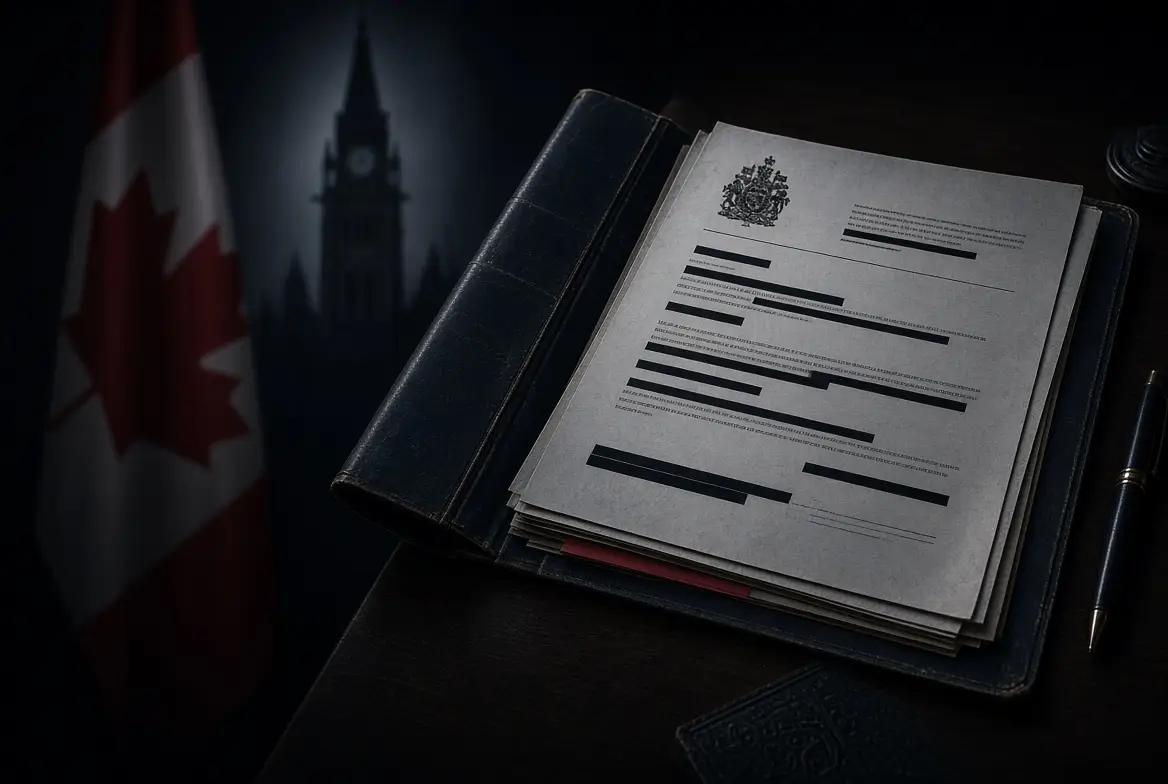
First, the OIC examined the records CSIS identified as responsive and found that “CSIS improperly withheld information on page 1 of the responsive records when it responded to the access request” (final report, p. 9). The OIC “was not convinced that the exemptions had been properly applied in all instances. CSIS conceded this and on March 3, 2026, issued a supplementary response to the complainant disclosing information previously withheld” (p. 1). The existence of responsive records is not a matter of speculation. The oversight body reviewed them.
Information From Foreign States Was Withheld by CSIS
Second, the OIC agreed that the information CSIS still withholds under subsection 13(1) “was obtained in confidence from a foreign state and/or an international organization of states” (p. 2). Equibit Group’s position is that this is Five Eyes material, precisely the type of material that has featured in prior Federal Court criticisms of CSIS’s duty of candour in ex parte warrant proceedings.
CSIS Invoked Ongoing Investigations, and the OIC Accepted It
Third, CSIS justified its remaining exemptions by pointing to ongoing investigations, and the OIC accepted them. Under subsection 15(1), the report records that “CSIS indicated that the disclosure of the remaining withheld records could irreparably damage ongoing investigations as well as relations with foreign governments and agencies” (p. 3). Under paragraph 16(1)(b), it records that the information “could reveal investigative techniques, tradecraft and plans. Further, any disclosure of this information could reasonably be expected to harm ongoing investigations” (p. 5). Under paragraph 16(1)(c), it states: “Disclosure of this information could reasonably be expected to reveal the identities of CSIS covert employees and harm the conduct of ongoing investigations and intelligence operations” (p. 7). The OIC concluded that “the remaining withheld information meets the requirements of subsections 13(1) and 15(1), paragraphs 16(1)(a), 16(1)(b), and 16(1)(c), and subsections 19(1) and 24(1)” (p. 10).
The report does not say whom those investigations concern. Equibit Group’s position is that records on blockchain and cryptocurrency, covering Equibit’s entire operating life and requested thirteen days after Equibit sued CSIS, are being withheld because they touch ongoing investigations and intelligence operations, and that this undercuts any suggestion that CSIS’s interest was purely historical or closed.
The Statement of Defence Contradicts the OIC Record
Fourth, Equibit Group’s position is that the OIC record contradicts key assertions advanced in the Attorney General’s Statement of Defence in the civil action. Where the defence minimized or denied CSIS’s holdings and involvement, the oversight body reviewed responsive records, found information improperly withheld, and accepted CSIS’s own representation that disclosure would harm ongoing investigations and intelligence operations.
The OIC Record Supports a Production Order Against CSIS
Fifth, the report provides independent, contemporaneous corroboration that supports the necessity of robust documentary production in the ongoing litigation. When an oversight body with statutory powers of examination has already reviewed responsive records and found information improperly withheld, the case for a court-ordered production regime that ensures completeness becomes significantly stronger.
Place in the Equibit Lawsuit
The OIC final report is not a judgment on the merits of Court File No. CV-20-00645492-0000. It is a specialized oversight body’s review of records CSIS actually holds and of the exemptions CSIS claimed over them. That review now sits beside the Statement of Claim against CSIS, the pleaded duty of candour issues in the secret-warrant record, and the allegation of a modern Zersetzung campaign set out across the four Ontario actions. When the oversight body and the defence describe two different documentary universes, the production fight is no longer abstract.