
On the night of 28 October 2023 — his birthday — Chris Horlacher walked through what was left of his home in Acapulco with a flashlight. Three days earlier, Hurricane Otis had come ashore. He had spent that day riding in on the first truck of relief supplies, setting up help for strangers. Then he went home, and there was no home.
It was not the first thing taken from him. It was only the latest.
Among Freemasons there is an old cry, reserved for a brother in real distress: Is there no help for the Widow’s Son? It is not a figure of speech. It is a formal request for aid, and a brother who hears it is bound to answer. Chris, the founder of Equibit Group, has carried that title twice — once by inheritance and once by grief. This is how he came to carry it. It sits underneath the case file, not in place of it.
Gain a lineage, lose the man who handed it down
Chris was in his mid-20s when the popularity of The Da Vinci Code sent him looking for its sources. Dan Brown had drawn on Holy Blood, Holy Grail by Michael Baigent and Richard Leigh, so Chris picked up a copy. His mother saw him reading it. She said at once that if he was interested in these subjects — the Templars, the Grail quests and the rest — he should talk to his grandfather, who was a District Deputy Grand Master. It was the first Chris had ever heard of his family’s ties to secret societies.
So he went to his grandfather. By then, his grandfather was on his deathbed.
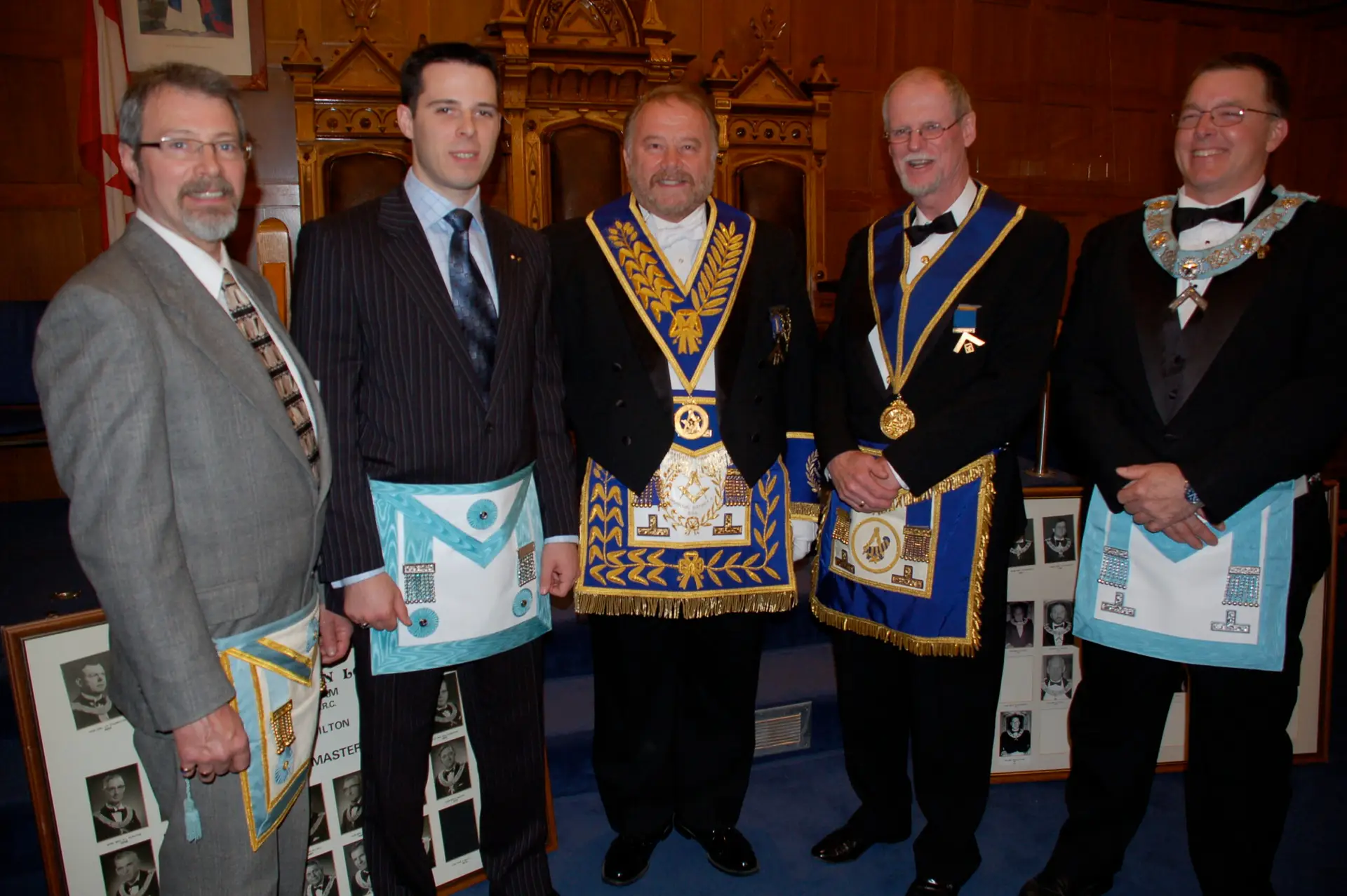
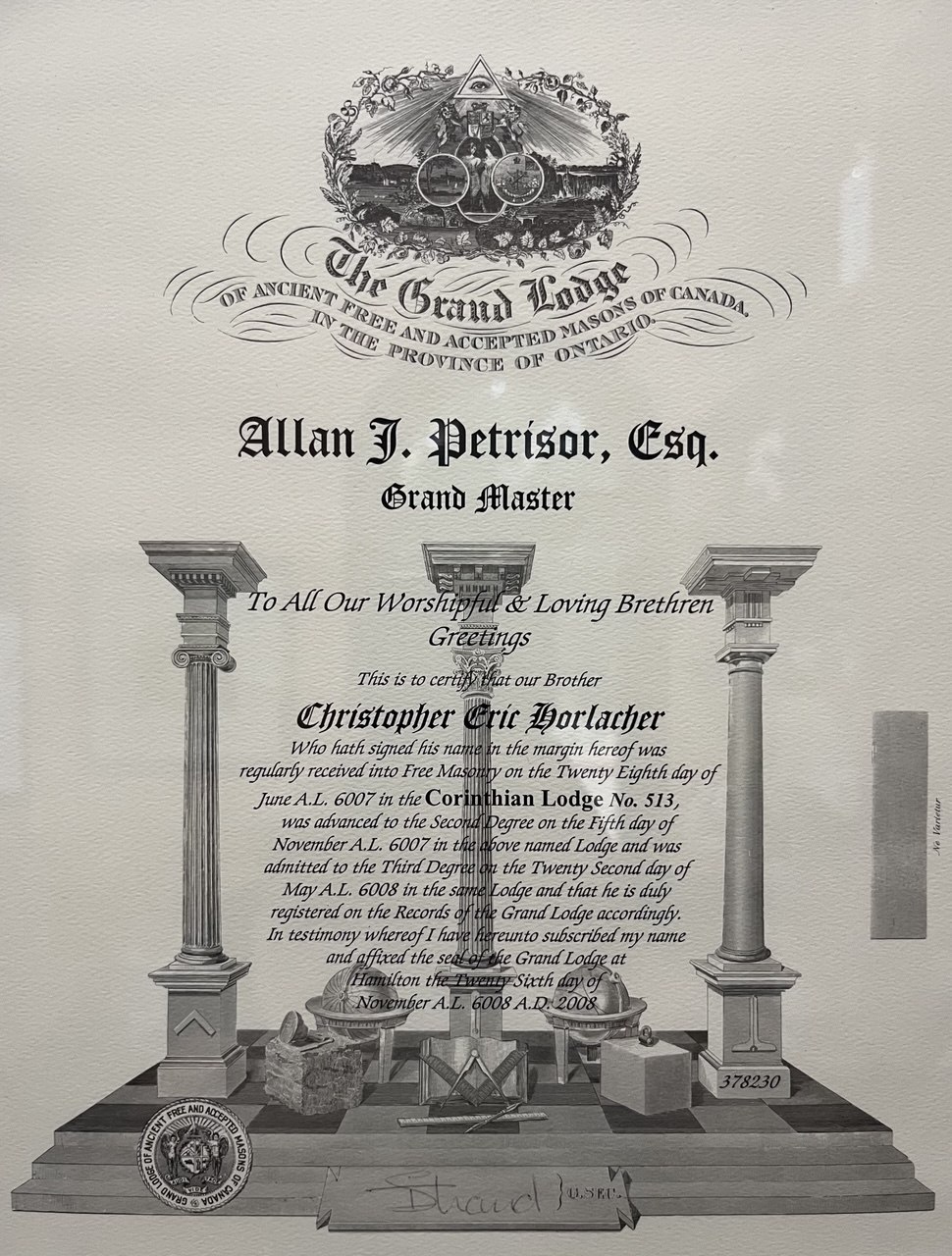
He found the door to a whole family history at the exact moment the man holding it open was leaving. Chris’s grandfather died on 14 December 2006. Six months later, on 28 June 2007, Chris was initiated into Corinthian Lodge No. 513 in Hamilton, under the Grand Lodge of Canada in the Province of Ontario. He was Passed on 5 November 2007 and Raised a Master Mason on 22 May 2008.
He did not walk into the Craft as a stranger. He walked in carrying a family’s duty that no one was left to explain to him.
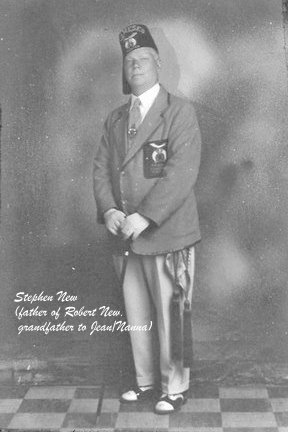
Stephen New was a Rameses Shriner. His son, Robert John New, served as Secretary to the District Deputy Grand Master, and Robert’s daughter Jean — Chris’s grandmother — married David Ross Bexton, who rose to District Deputy Grand Master himself. Their children included Chris’s mother, Jeanelle; his uncle David Bexton Jr. — known to family and friends as “Bud”; and his uncle Gavin.
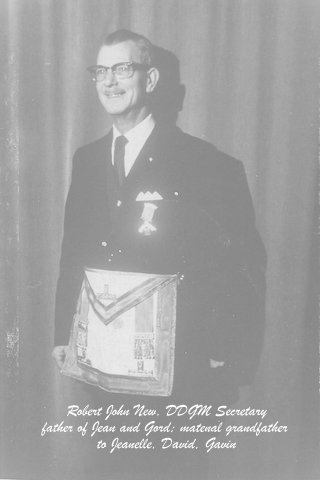
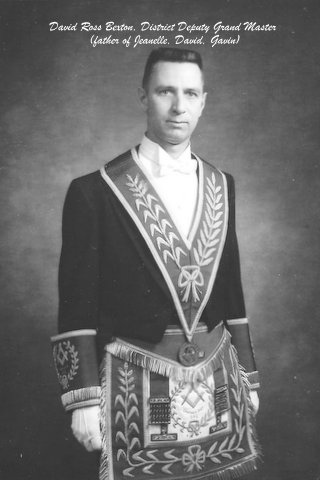
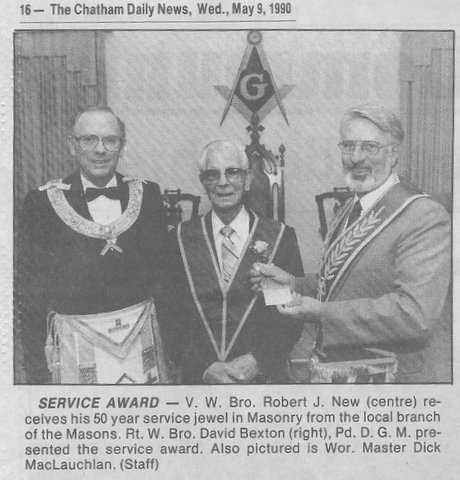
On Wednesday, 9 May 1990, the Chatham Daily News recorded the two lines meeting: V.W. Bro. Robert J. New receiving his 50-year service jewel from Rt. W. Bro. David Bexton, Past D.G.M., with Worshipful Master Dick MacLauchlan looking on. Fifty years of showing up. That is what the family meant by the Craft.
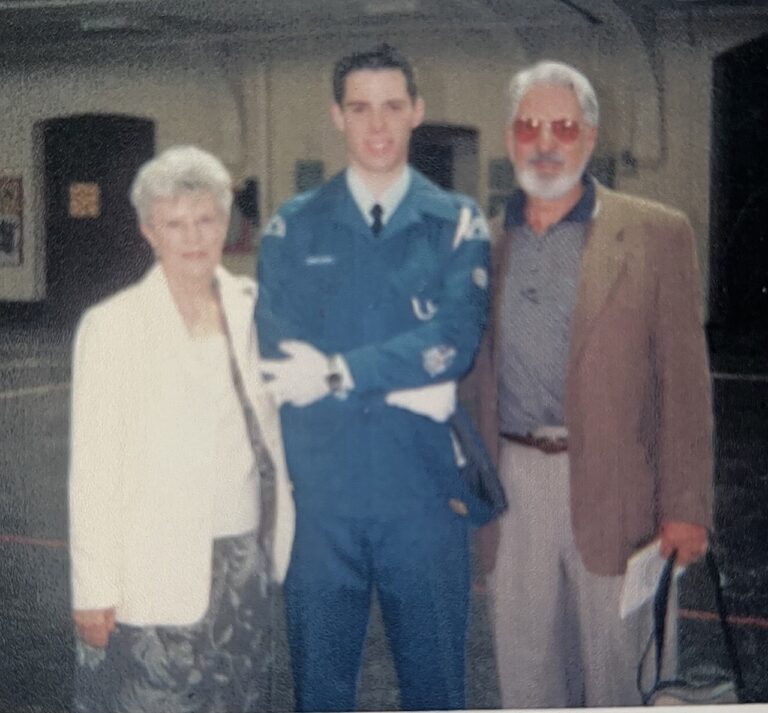
That is the line Chris stepped into. Around mid-2000, at eighteen, he finished his Air Cadet career with his maternal grandparents, Jean and David Ross Bexton, beside him. The photograph was taken right after the final annual inspection — the last parade Chris commanded as a cadet. The rank at the bottom of his sleeve is Chief Warrant Officer First Class, and the round St. John Ambulance First Aid badge is visible. His Survival Instructor badge is not in frame, but the white lanyard on his left shoulder marks him as a graduate of that program.
Look at the two people standing with him. Jean and David are both gone now.
Seven years later, he was kneeling at the altar of Corinthian 513.
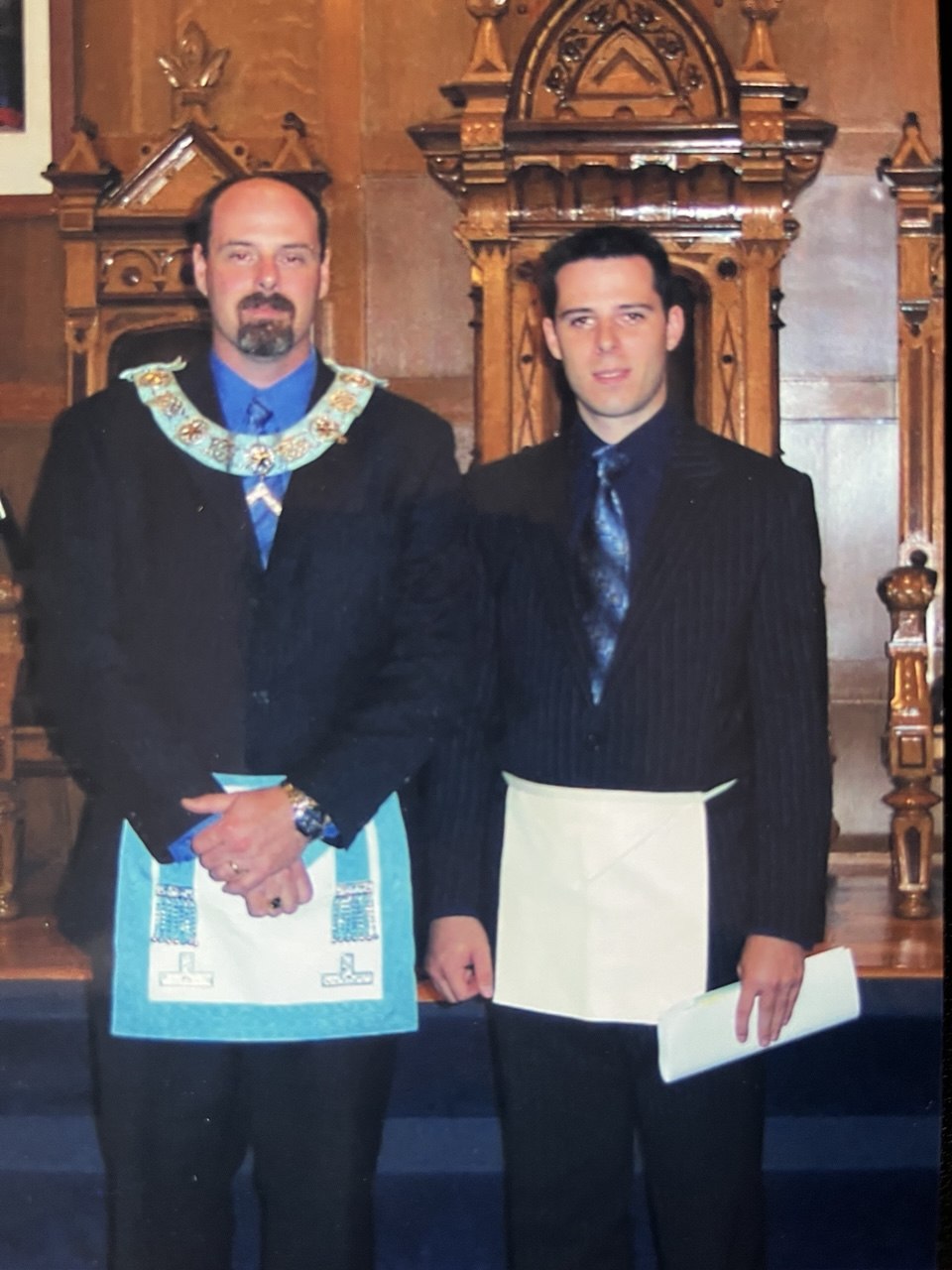
When he was Raised, his uncle stood with him — the family standing in where his grandfather could not.
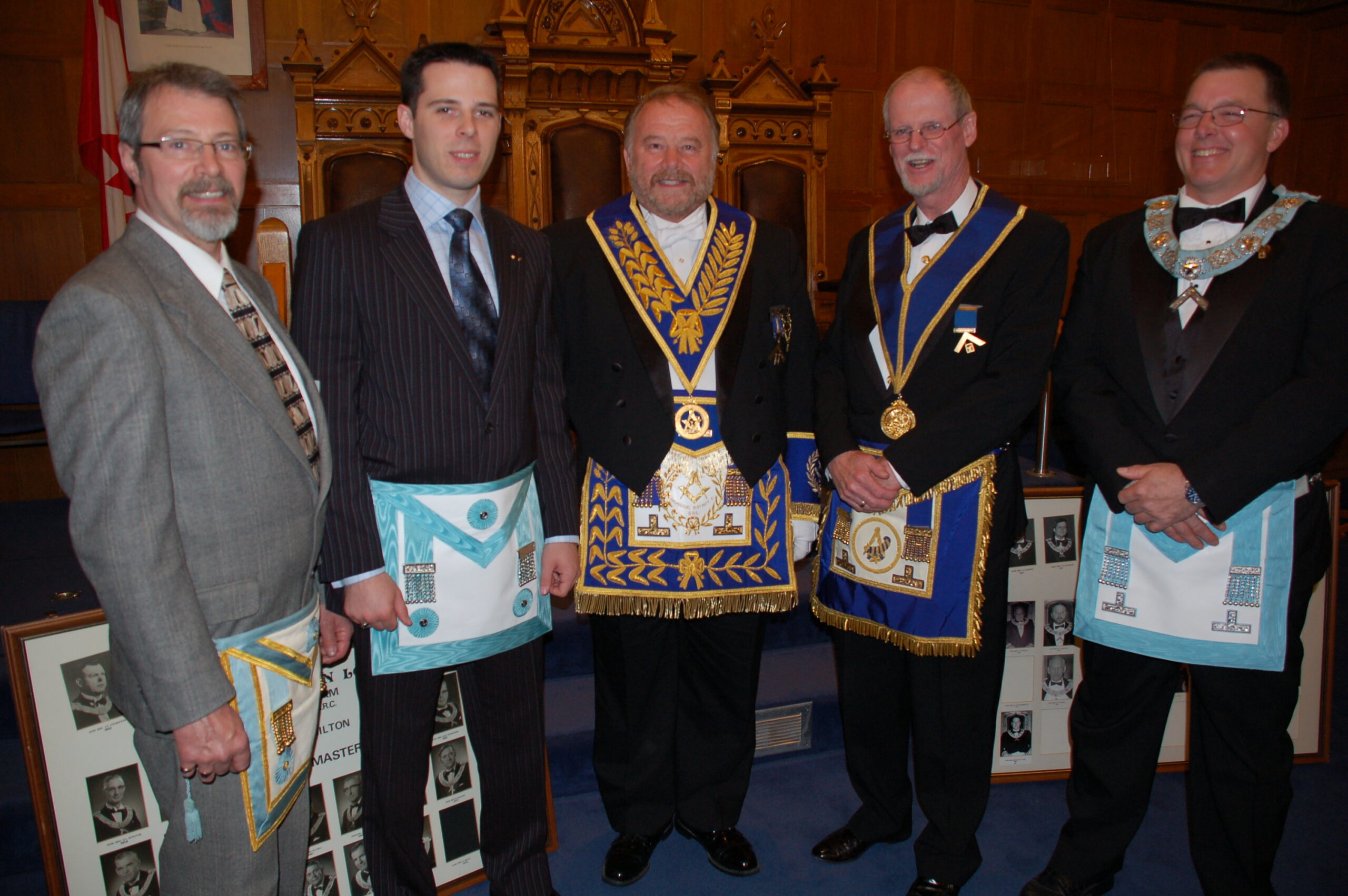
There is a quieter thread here too. Adom Z. Bouchard, a colleague from Air Cadets, joined the same lodge and later served as its Worshipful Master in 2014–15, following Chiarot. Cadets to Craft: the same habits of duty, carried forward by people who knew each other young.
On 28 June 2018 — exactly eleven years to the day after his initiation — Corinthian 513 issued Bro. Christopher Eric Horlacher a Certificate of Demission, signed by Secretary C. J. Stewart and Worshipful Master Ed Muhn. By then, the life that had made room for the lodge had been taken apart. Even the inheritance had to be set down.
Historical note: on 27 September 2018, Corinthian Lodge No. 513 amalgamated with Wardrope Lodge No. 555 to form Harodim Lodge No. 513.
A word to readers who flinched at the square and compasses
Some readers will have stopped listening at the word “Freemason.” They have been told the lodges are Luciferian, that Albert Pike wrote out a plan for three world wars, that the Widow’s Son is a code for something dark. Before going further, it is worth knowing where most of that comes from — because it comes, overwhelmingly, from one man who stood up in public and admitted he made it up.
His name was Marie Joseph Gabriel Antoine Jogand-Pagès, and he wrote as Léo Taxil. An anti-clerical satirist, he announced a conversion to Catholicism in 1885 and spent the next twelve years publishing lurid “exposés” of Freemasonry: a secret Palladium Rite under the command of Albert Pike, a whistleblower named Diana Vaughan, demonic rituals narrated by a “Dr. Bataille,” and, in Le Diable au XIXe Siècle, a supposed Palladian “plan” dated 15 August 1871. It sold. It was believed at the highest levels.
On the evening of 19 April 1897, at the Hall of the Geographic Society in Paris, Taxil confessed. There was no Dr. Bataille. There was no Diana Vaughan the whistleblower. There was no Palladium Rite. “There wasn’t the least masonic plot in this story,” he told the room. His audience had been asked to check their walking sticks at the door.
The confession did not kill the hoax. Later writers lifted the “plan” without mentioning that its author had disowned it, and in the 1950s it was embroidered into the “three world wars” letter attributed to Pike, which appears nowhere in Taxil’s own text. It still circulates — on alternative channels and in mainstream tabloids alike. As the Mr. E Reports Substack documents in “The Greatest Hoax of All Time” and “Decoding The Taxil Hoax: Part 1”, the Freemasons have proved a durable, convenient scapegoat — a limited hangout that sends public anger toward an innocent party and away from whoever actually deserves it.
What Chris inherited is not that cartoon. It is a great-grandfather’s fifty-year jewel, a grandfather’s office, an uncle at his side on the night he was Raised — and a cry for help that a brother is bound to answer. If you arrived carrying a confessed fraud’s prejudice, set it down for the length of this story. It is about a man being widowed, again and again.
Gain a wife, lose a mother
Chris married Meera on 4 September 2015.
His best man was Marc Godard — and it took a lot of convincing to get him to accept. Then he did not come to the ceremony. His explanation was that his wife needed him at home with their newborn son, born on 11 August. But both of her parents were already there helping. He could have attended the ceremony. He could have brought his family. He did neither. The place beside Chris at the most important moment of his life stood empty. Godard did come to the reception, and in the photograph he stands at Chris’s right.

At the time it looked like an awkward excuse. Read against what followed, Chris sees something else: a sliver of conscience. A man uneasy about standing in a place of honour beside someone he was helping to set up. That is Equibit’s position and Chris’s reading of the facts — not a finding of any court — and in our view it goes to mens rea, the guilty mind any criminal prosecution would need to establish.
Godard is now named in the court record as an embedded CSIS officer, in action CV-26-00015305 (see Statement of Claim Filed Against Marc Godard); those are allegations in a pleading, not yet proven. He co-founded Equibit. His exit was timed to the Ontario Securities Commission’s investigation and later enforcement action. He returned immediately afterwards as a contractor, then CEO, while the company was collapsing. And as we have argued elsewhere on this site, the attempted takeover that followed had a purpose: end the suit against Christian Saucier (CV-21-00654929) and take control of the CSIS suit (CV-20-00645492), so that it would quietly die. Chris alone finances these lawsuits. Marc never contributed a dollar to them.
One week after the wedding, Chris’s mother, Jeanelle — the woman who had first pointed him toward his grandfather — was diagnosed with terminal stage-four brain cancer.
Not long after the wedding, Chris and Meera lost their condo when its ownership changed hands and the new landlord had other plans.
His mother died on 23 August 2016 — twelve days short of his first wedding anniversary. From the vows to her death: 354 days.
That made him the Widow’s Son a second time — not in ritual now, but in fact. Gain a wife; lose a home; lose a mother. It would become the pattern of his life.
Lose a country, lose faith in the courts
The company went next. Equibit — the thing he had built, published and shipped — collapsed under what its pleadings describe as a sustained institutional campaign. Then the country.
On 8 June 2021, Chris left Canada with his family.
The decision had been building. Chris had observed digital attacks coming from his own router (see Honeypot Probes: Government-Linked Network Activity), and he wanted to thwart the section 21 warrant regime as best he could. Then Prime Minister Justin Trudeau announced a backroom deal to shut down flights to Mexico and the Caribbean — the most popular routes Canadians fly. Chris was concerned the family would be trapped in the very country he was suing, left completely vulnerable. So he got his family out.

He had been raised to believe the courts were where a wronged man finally gets heard. In 2022, Equibit obtained default judgment against Sergei Sachkov — liability in October, damages of $1,744,711 in December. For a few months, something had gone right. In May 2023, Justice Merritt set that judgment aside, and the Divisional Court refused leave to appeal. In his words, that “killed my faith in the court system.”
He is still litigating anyway. A man who has lost faith in the courts and keeps filing in them is not acting on hope. He is acting on duty.
Lose a home, on his birthday
On 25 October 2023, Hurricane Otis struck Acapulco, where the family was then living. Spurred on by a storm-watcher friend who issued them a timely warning, they fled to Chilpancingo. He believes that had they stayed, they may not have survived.
Three days later, on 28 October — his birthday — Chris went back alone, leaving his family in Chilpancingo. He rode in on the first truck of relief supplies, part of a client’s initiative, Hurricane Otis Recovery, which he helped in an administrative and strategic capacity.
That first day in Acapulco, Chris and the relief team spent identifying local community leaders and organizers they could partner with, and set up distribution centres for residents. Chris then organized the supply chains and the search-and-rescue operations for their community members. The effort went on to raise more than US$500,000 and deliver literally tons of supplies to the people of Acapulco.
He spent his birthday putting other people’s lives back in order. That night he found his own home obliterated.
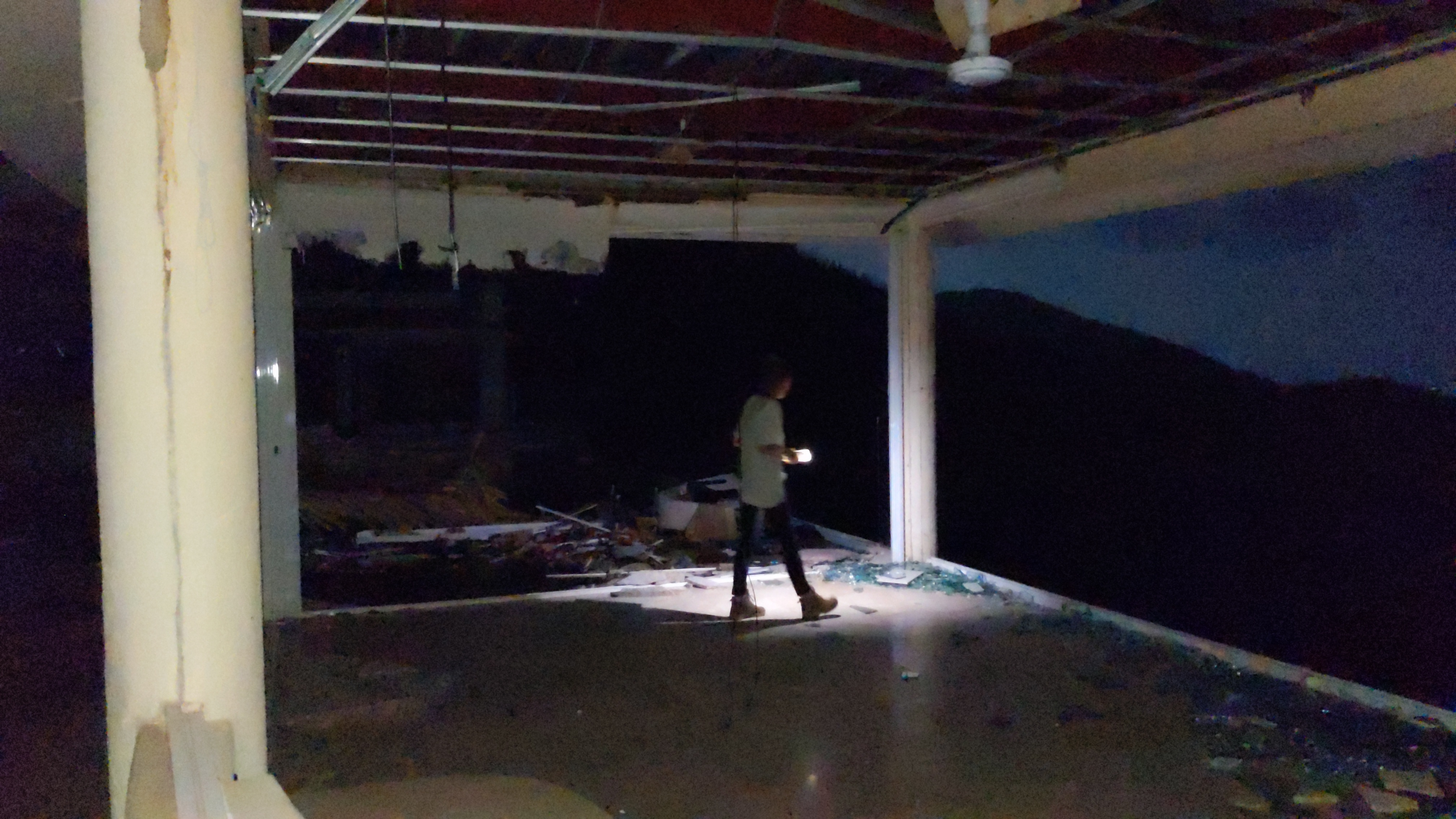
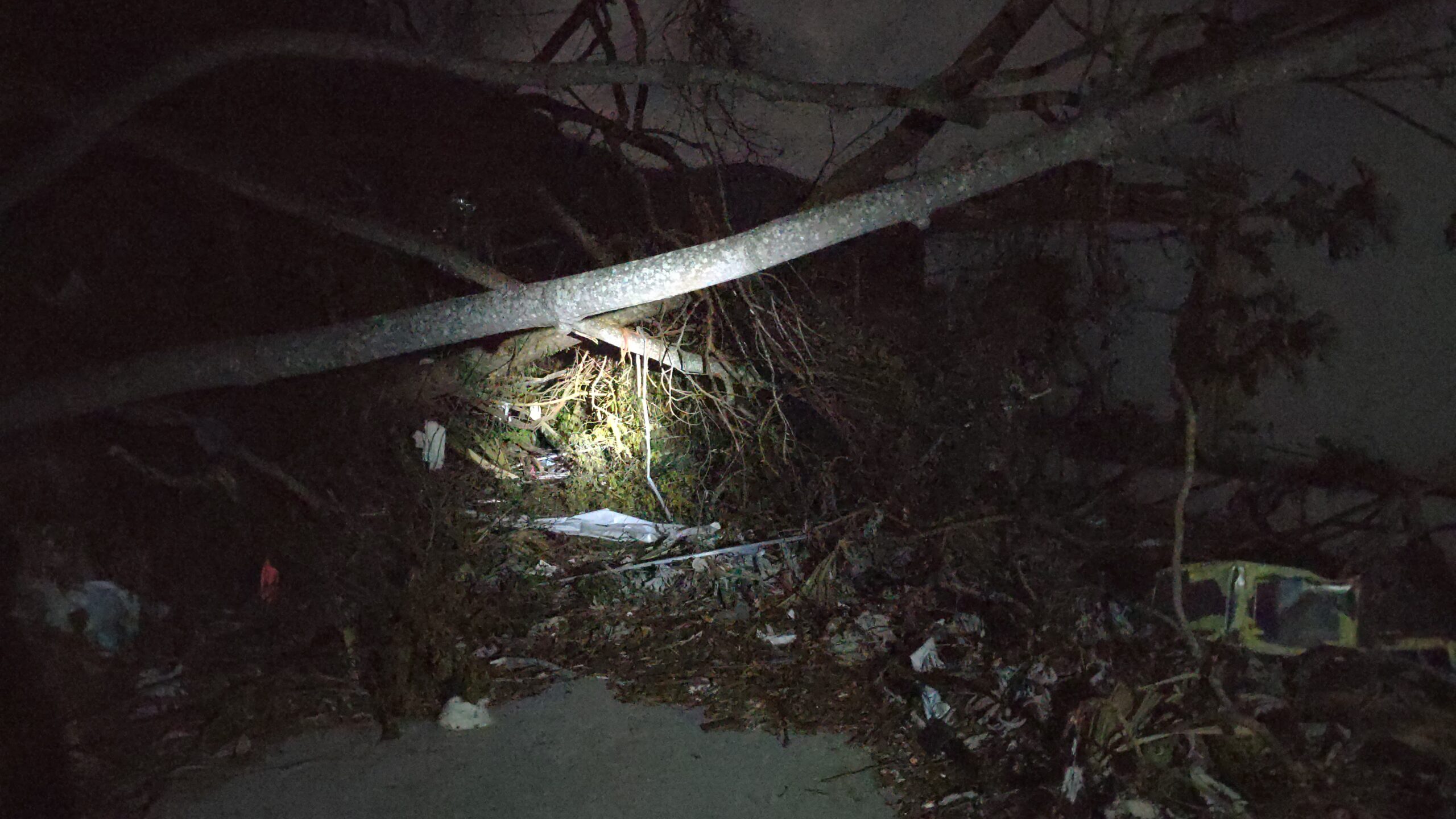
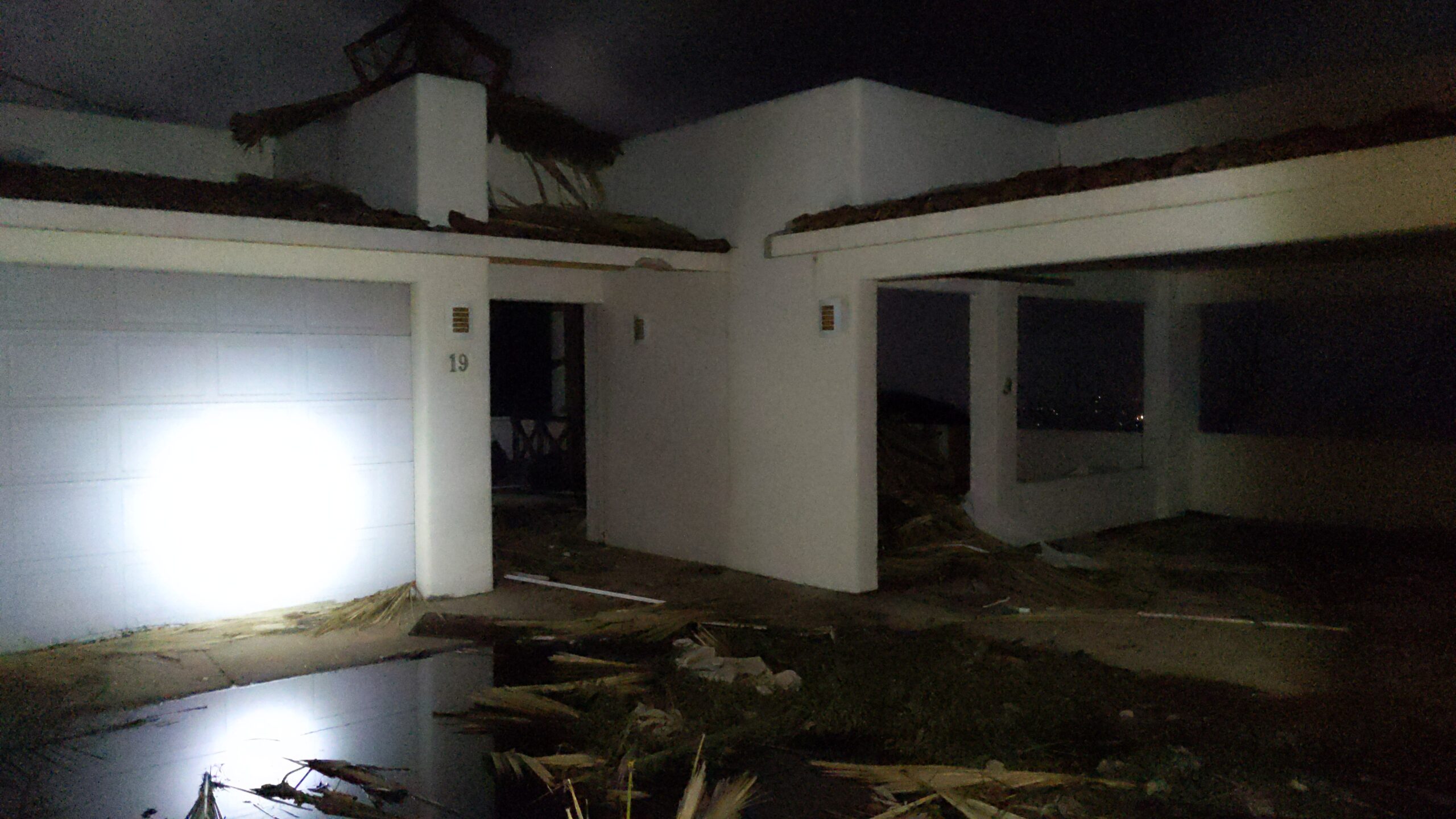
A few days later he returned and filmed what was left.
The family later relocated to a small pueblo near Mexico City.
What he did with what was left
Here is what grief and fury turned into, because it is the only part of this story that was his to choose.
The company was killed, so he built a court file. Before the collapse, the builder’s work was public: the Equibit protocol paper is on arXiv (1612.06953), a creative project brought to completion. Today the same mind that wrote it writes filings. A judicial complaint. A secrecy application made public. Manuscripts submitted to journals — the IRCT’s Torture Journal among them; Surveillance & Society declined.
His faith in the courts was killed, so he stayed on the file anyway. His home was erased, so he went to work. In 2026 he still serves as a CPA, consulting for clients — that is how the lawsuits get paid for.
Set all of that beside what his pleadings describe: a sustained institutional campaign against him and his company, through documented actors and conduct now before the court. In our view, a campaign like that is built to leave a man looking unstable and alone. Equibit collapsed under it. The man who built it did not.
Is there no help for the Widow’s Son?
A grandfather lost on 14 December 2006, just as Chris was learning who he had been. A lodge entered six months later and left eleven years to the day. A best man who would not stand at the altar. A mother diagnosed a week after the wedding and buried twelve days before the first anniversary. A condo. A company. A country, left from a tarmac. A $1,744,711 judgment, taken back. His faith in the courts. A home, erased on his birthday while he was out helping strangers.
He is still here. Still working, still filing, still paying for the fight himself.
If you care about liberty under a security state, this is what one skilled person looks like when the state tries to switch him off — and he is still here. That should tell you something about how much a single person can do. It should also tell you how much rests on one set of shoulders. Help keeps the file alive: read the pleadings, follow the case, share the record with people who will actually read it, and, if you are able, support the litigation itself on the Take Action page.
In the lodge, a brother who hears the cry is bound to answer. Out here, no one is bound. That is why we are asking it the way the Craft intends — plainly, as a request:
Oh Lord, my God. Is there no help for the Widow’s Son?