
Court File No. CV-20-00645492-0000
Equibit Group Ltd. v. Attorney General of Canada et al.
Related: Five Things the OIC Final Report Established · Statement of Claim Against CSIS · CSIS Secret Federal Court Warrants and Duty of Candour
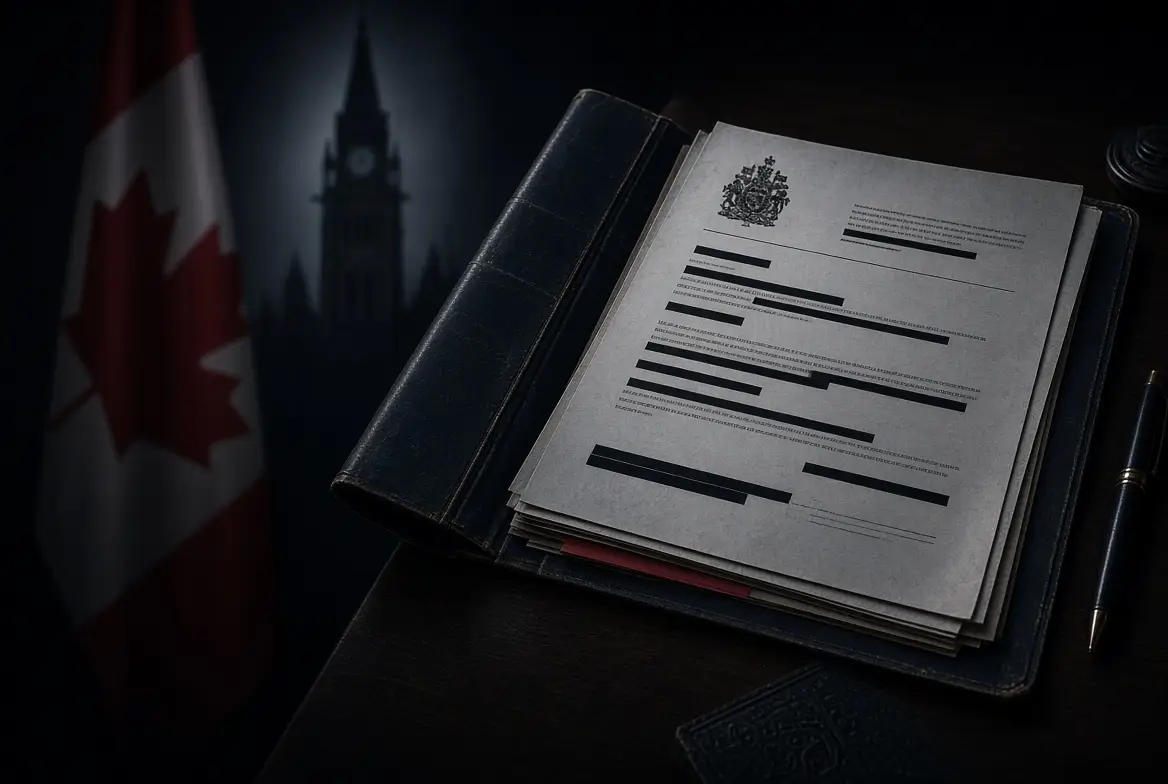
One of the most important chapters in the Equibit lawsuit is Chris Horlacher’s multi-year attempt to obtain CSIS records through Canada’s Access to Information and Privacy process, then through a complaint to the Office of the Information Commissioner. The OIC final report is not a judgment on the merits. It is an official finding on what CSIS actually held — and what it withheld — while the Attorney General was pleading a defence in open court.
Horlacher’s ATIP Requests to CSIS
Horlacher filed targeted requests seeking records related to himself, Equibit Group, suspected human assets, technical incidents, and any CSIS interactions with the Ontario Securities Commission or other regulators. These requests were reasonable and directly relevant to the allegations in the Statement of Claim.
One such request was deliberately crafted in order to obtain a copy of a report that CSIS had already released to the Canadian Press via an ATIP request.
CSIS’s responses were consistently obstructive: broad exemptions, heavy redactions, long delays, and in many cases, claims that “no records exist.”
The OIC Complaint and the Final Report
After CSIS’s inadequate responses, Horlacher filed a formal complaint with the OIC in November 2020. The resulting Information Commissioner’s Final Report is revealing.
Read the complaint made to the OIC here:
Read the full OIC Final Report here:
Five Eyes Material, Ongoing Operations, and Withheld CSIS Records
The report confirms several critical points:
1. CSIS possessed and was deliberately withholding relevant material.
CSIS eventually conceded and released additional records on March 3, 2026, after initially withholding them. The OIC explicitly found that CSIS had “improperly withheld information” in its original response.
2. Foreign Government / Five Eyes Involvement
Under subsection 13(1), the OIC upheld exemptions for information obtained in confidence from foreign governments and/or international organizations of states. This strongly suggests that material related to Horlacher/Equibit originated from or was shared with Five Eyes partners.
3. Ongoing Operations Against Equibit and Chris Horlacher
Multiple exemptions (particularly 15(1), 16(1)(b), and 16(1)(c)) were upheld on the basis that disclosure could harm ongoing investigations, reveal investigative techniques, or compromise intelligence operations. As discussed in a de-banking post, Chris has managed to record what appears to be undercover agents attempting to lure Chris into yet more entrapment schemes. This directly contradicts any claim that CSIS had no interest or involvement in Equibit or Horlacher.
Problems in the OIC Process
The OIC investigation itself was plagued by excessive delays, taking nearly five years to complete. During the process, the OIC made unusually broad demands for highly sensitive personal information from Horlacher — including privileged records that appeared irrelevant to the access requests.
Even more concerning, the additional document released by CSIS on March 3, 2026 relies in part on a report sourced from the Southern Poverty Law Center (SPLC) — an organization with a well-documented history of ideological bias and controversial labeling practices. This organization has just been indicted by the US Department of Justice on charges of wire fraud, false statements, and conspiracy to commit money laundering, for funneling millions of dollars to the very groups it rails against.
Additionally, CSIS withheld a document that had already been released to the Canadian Press — the very document Horlacher was originally seeking. This raises serious questions about bad-faith withholding and selective disclosure.
The OIC Final Report Contradicts CSIS’s Defence
The OIC report contains findings that fundamentally contradict positions taken by CSIS in its Statement of Defense in the civil lawsuit. While CSIS has claimed absolutely no knowledge or involvement, the OIC process revealed:
- The existence of responsive records that were deliberately withheld
- Foreign government/intelligence sharing
- Ongoing investigative or intelligence activities
These contradictions expose a troubling disconnect between what CSIS tells the court in litigation and what it concedes during access-to-information proceedings.
Place in the Equibit Lawsuit
The ATIP file and the OIC final report now sit beside the Statement of Claim against CSIS in Court File No. CV-20-00645492-0000. They are the independent documentary check on the Crown’s defence. The five-point digest is Five Things the OIC Final Report Established That Contradict CSIS’s Position. The candour problem on the warrant side is CSIS Secret Federal Court Warrants and Duty of Candour. When an oversight body with statutory examination powers has already confirmed responsive records, Five Eyes material, and ongoing operations, a production order is no longer a fishing expedition.
The ATIP/OIC experience provides further evidence of systemic obstruction. When a Canadian citizen attempts to exercise basic transparency rights regarding potential surveillance and targeting by his own government, he encounters years of delays, improper exemptions, demands for irrelevant personal information, and final reports that quietly acknowledge ongoing operations while shielding the agency behind broad national security exemptions.
This is exactly the kind of environment in which Zersetzung-style operations can flourish: low-visibility, high-plausible-deniability harassment enabled by secret warrants and protected by opaque oversight mechanisms.
In a post about Section 21 warrants we covered how CSIS has been cited for repeated breaches of its Duty of Candor to the Federal Court when applying for warrants under section 21 of the CSIS Act. In this post we showed how this behavior is extended to ATIP requests and the OIC. Recently, the Federal Court of Appeals took a very strong stance against this kind of behavior from the government.
if an administrative decision-maker and its staff carrying out a search and production order are later found to have participated in a cover-up, life-changing consequences—civil and criminal—will follow.
It seems the courts may finally be catching up to the general public with their absolute disgust at the government’s compulsive lying.
The public documentation at equibitlawsuit.com exists because formal oversight channels have proven inadequate.